



The year 2026 is a year of major sporting events. After the Winter Olympics, the highly anticipated FIFA World Cup takes center stage. This championship will go down in history not only for its record number of participating teams and matches played but, above all, as the moment of definitive shift away from traditional hardware structures and established technological solutions towards centralization, remote production, and IP distribution.
The Geographically Most Extensive World Cup in History and the 4,500 Kilometer Challenge
While the last championship in Qatar in 2022 was defined by its "compactness," with distances between stadiums in the tens of kilometers and teams and equipment being able to remain in one place, 2026 represents the opposite extreme. The host cities in the USA, Mexico, and Canada make for the most geographically extensive championship in history. The symbol of this challenge is the distance between the furthest host cities, Miami and Vancouver, which is a respectable 4,500 km. For comparison:
- World Cup in Russia 2018 (in the largest country in the world): The distance between Kaliningrad and Yekaterinburg was approximately 2,500 km.
- World Cup in Qatar 2022: The maximum distance between stadiums was only about 70 km.
This distance considerably limits the traditional model of moving production crews. The idea of hundreds of engineers, directors, and operators constantly traveling with equipment across time zones is economically and ecologically unsustainable in 2026. The solution is nothing else than the deployment of centralization and remote production (REMI).
IBC Dallas: The Broadcasting Hub of the Championship
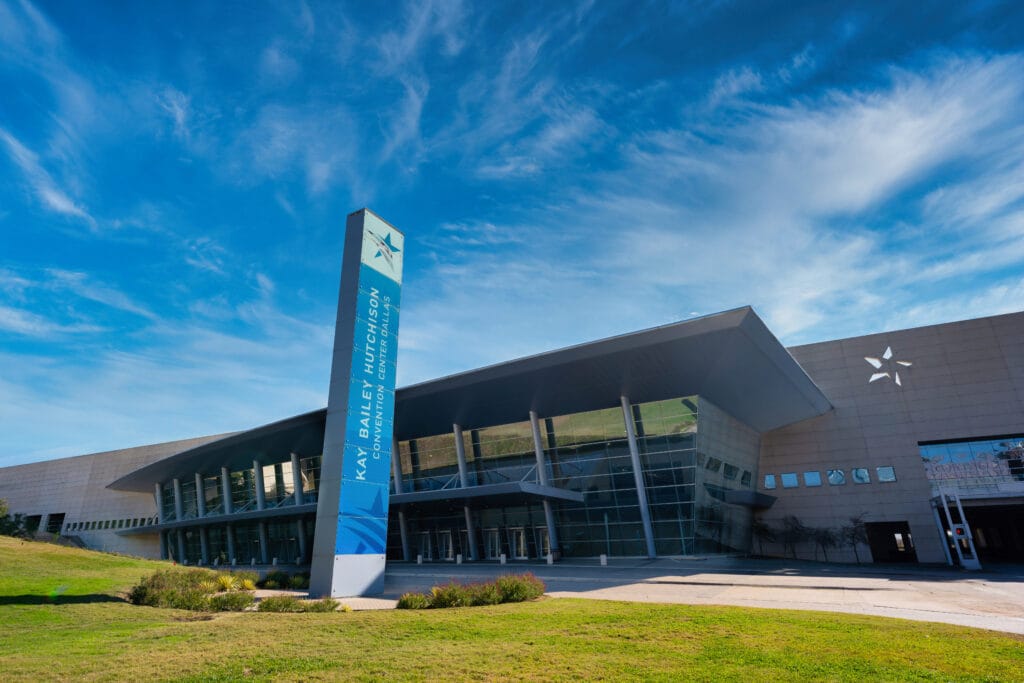
The center of all technical activity is the International Broadcasting Centre (IBC) in Dallas, Texas. The choice of Dallas is not random. This city already served as the main broadcasting center during the USA World Cup in 1994. The IBC in Dallas has an area of 45,000 m², and its construction began in mid-January 2026 to ensure everything was 100% ready by the start of the championship.
However, the IBC is not just facilities for journalists and Media Rights Holders. It is, above all, the place where all "football traffic" from the stadiums converges. All feeds are subsequently processed in the IBC and prepared for distribution to media worldwide. Thousands of broadcast representatives, technical experts, and members of the host organization work at the center. The significance of the IBC has, however, transformed dramatically in recent years. There is a shift from the traditional model of individual solutions, where most stations had their extensive physical presence at the IBC, to a modern concept of centralization, remote production (REMI), IP distribution, and the use of the cloud. Main Benefits of Centralization at the IBC:
- Quality Consistency: Teams responsible for graphics, color corrections, and replays work under one roof. This ensures an identical visual style for matches played in Mexico City and Toronto.
- Know-how Sharing: Engineers, technicians, and operators can share insights from individual stadiums in real time, increasing efficiency in resolving any technical incidents.
- Economics and Sustainability: Eliminating thousands of flight tickets and hotel nights for technical staff significantly reduces costs and the carbon footprint.
Jumbotrons and video walls at all stadiums will also be controlled centrally from the IBC.
Network Infrastructure and Transition to ST 2110
In order to centralize production, reliable connectivity is essential. This is provided by Verizon, which built a dedicated Broadcast Contribution Network (BCN) for the championship. This network connects all 16 stadiums directly to the IBC in Dallas.
Technological Shift from SDI to IP
As with the latest Olympic Games, we are witnessing here the definitive transition from the standard SDI interface to an IP format according to the SMPTE ST 2110 standard. This transition makes it possible to transmit video, audio, and metadata as separate IP streams, bringing unprecedented flexibility. A key element is the use of JPEG XS compression. This "lightweight" compression offers:
- Visually Lossless Quality: Key for sports broadcasts in 4K/HDR.
- Extremely Low Latency: Critical for remote production, where staff in Dallas must see the image from the stadium almost instantly (sub-frame delay).
- Bandwidth Savings: Allows for efficient use of fiber optic routes without signal degradation.
London Hub: Post-production across the ocean
A unique feature of the World Cup 2026 workflow is the involvement of a remote hub in London. This hub primarily serves for post-production and content editing. Why London? It is a proven model from 2023 that demonstrated its effectiveness in similarly extensive productions.
Talent Concentration: London has a huge base of experienced editors and graphics artists.
Sustainability and Efficiency: Instead of sending hundreds of additional workers to the USA, which would involve significant costs for flight tickets and accommodation, the signal is simply directed to London.
This significantly saves the budget and at the same time reduces the environmental impact of the entire event (lower carbon footprint). Thanks to IP workflow and cloud technologies, editors in London can access recordings at the IBC almost instantly.
Signal Distribution and Rise of SRT
Traditional satellite transmissions are still the standard for widespread distribution, but the 2026 championship brings an alternative in the form of the rise of the SRT (Secure Reliable Transport) protocol. SRT allows for secure and reliable signal distribution over the public internet or dedicated IP lines. This fundamentally changes the game for smaller Media Rights Holders. They no longer need to build expensive satellite downlink stations or have a physical presence at the IBC. They can receive full-fledged feeds directly at their television centers in Europe, Asia, or Africa at minimal cost and with high quality. Key Benefits of IP Distribution:
- Scalability: Ability to handle dozens of different feeds (multicam, data-feeds, player-cams) at once.
- Interactivity: Easier integration of additional data for digital platforms and mobile applications.
- Robustness: IP networks with protocols like SRT can intelligently correct packet losses, which is not possible with satellite in bad weather.
The World Cup is Not Just an Experience for the Viewer, but Defines a New Broadcasting Standard
The 2026 FIFA World Cup is not just a sporting event; it is a technological manifesto. It shows us that geographic obstacles can be overcome with intelligent centralization and modern IP standards. Similar to the Olympic Games, this championship defines a fundamental technological shift and determines the direction broadcasting will take in the coming decades:
- Shift away from special hardware towards Cloud and Software-defined solutions.
- Transition from SDI to IP (ST 2110) as the new industrial standard.
- Use of remote production (REMI) as a path to sustainable and efficient broadcasting of major events.
This championship clearly shows that thanks to technologies like SRT, JPEG XS, and robust IP connectivity, it no longer matters whether the venue is 40 or 4,500 kilometers away. The heart of production can be anywhere, while the emotions of the game remain just as close to fans around the world.