

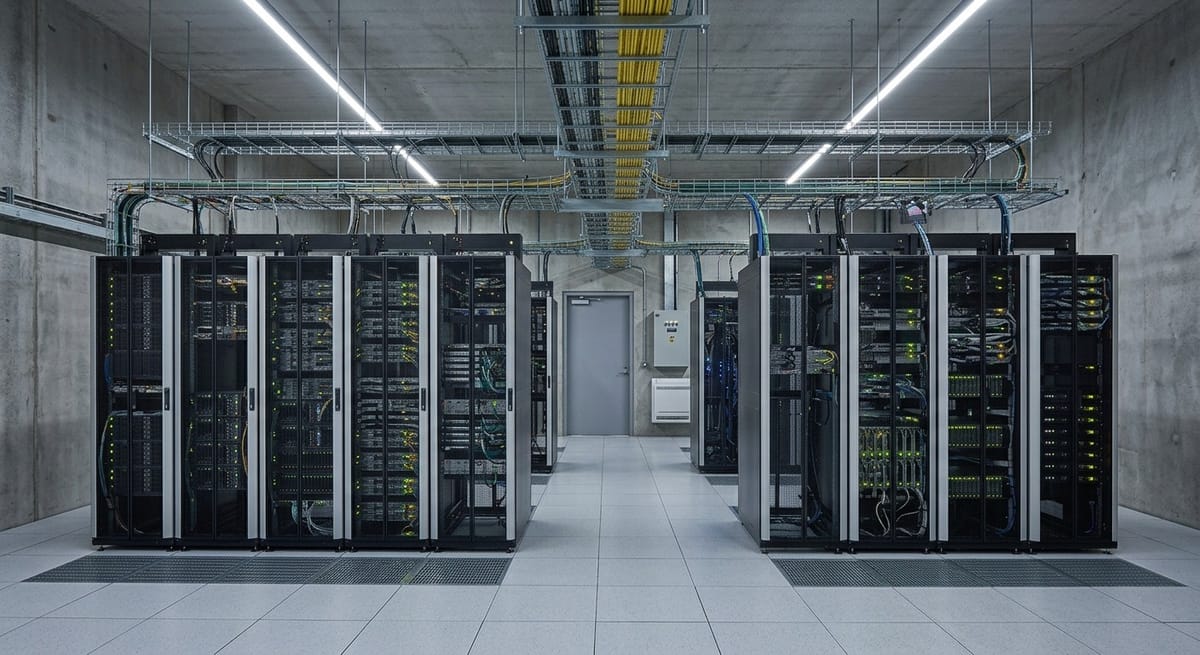
Building your own data center and offering services cheaper than major players—an idea that has crossed the mind of more than one IT architect. But does it actually make sense to build your own data node and offer its capacity to customers? Can such a project be profitable today, and would there be any demand given that thousands of professional data centers operate worldwide? What would my value proposition be, and how can I compete with others?
In this article, we will look at the entire process of building your own micro-data center and all the pitfalls that need to be addressed along the way.
My Goal
To build my own small-scale data center to run my own services offered to end-users. The goal is to build a solution at a fraction of the cost while maintaining high quality, reliability, and security. Total capital and operational expenses should be significantly lower than standard rack rentals in professional data centers.
How Did I Come Up with the Idea of Building a Data Center?
I happened to acquire decommissioned IT hardware that by no means belonged in the scrap yard. For a minimal cost, I secured dozens of servers, switches, and routers whose age did not exceed 5 years. I thought to myself: could this technical equipment still be reasonably utilized? Could a functional service be built on top of it, or could it be leased directly?
To top it all off, the entry conditions improved even further when I got the opportunity to lease an unused basement space in a residential building for a symbolic price.
And so began my research and calculations into whether this idea is even feasible and, above all, profitable. Let's look at everything that needs to be solved, arranged, ordered, and installed so that our technology operates reliably and brings maximum satisfaction to customers.
Building Our Own Data Center: What Will We Need?
Suitable Space
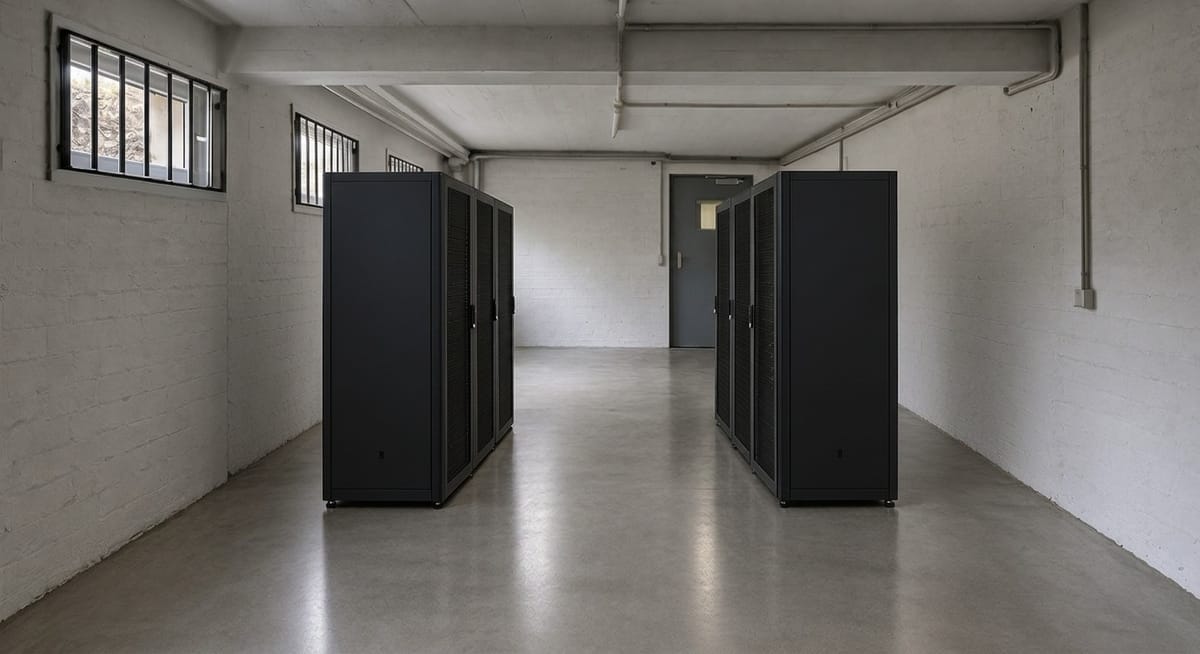
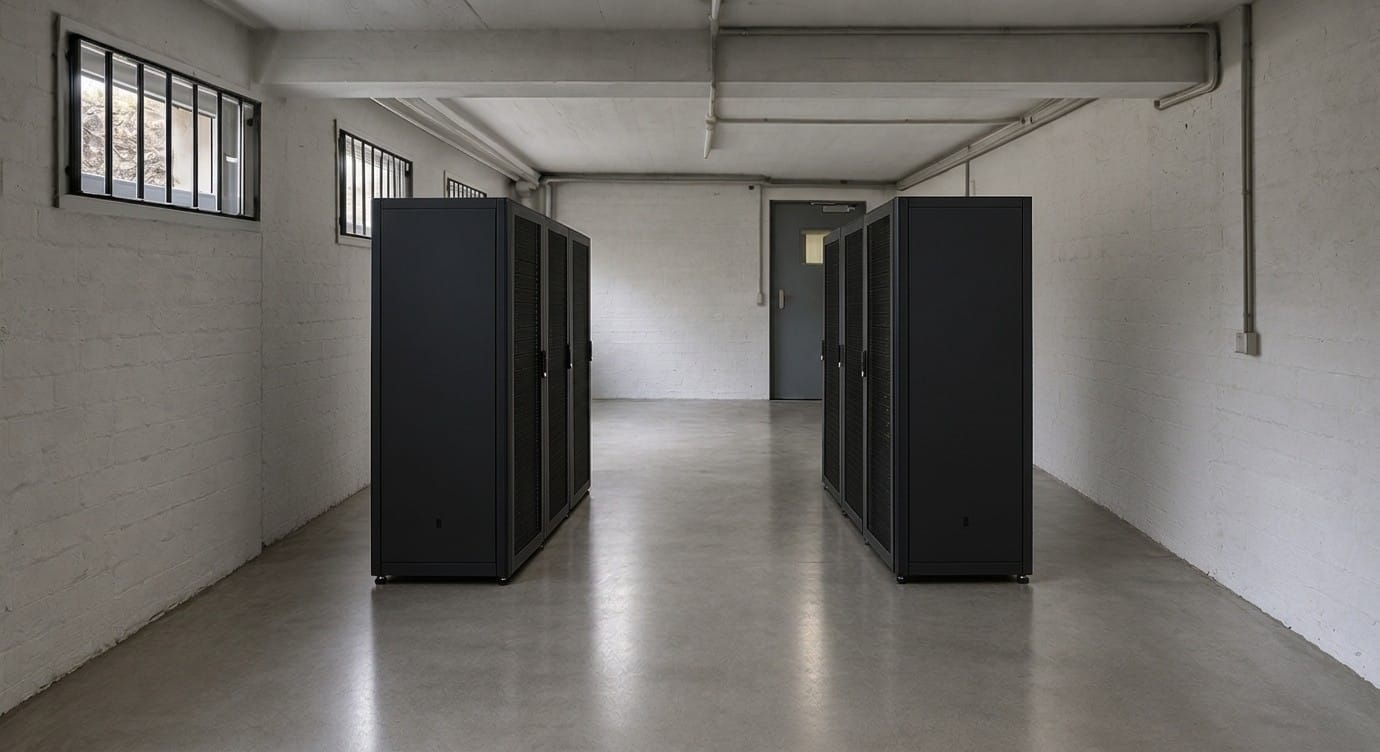
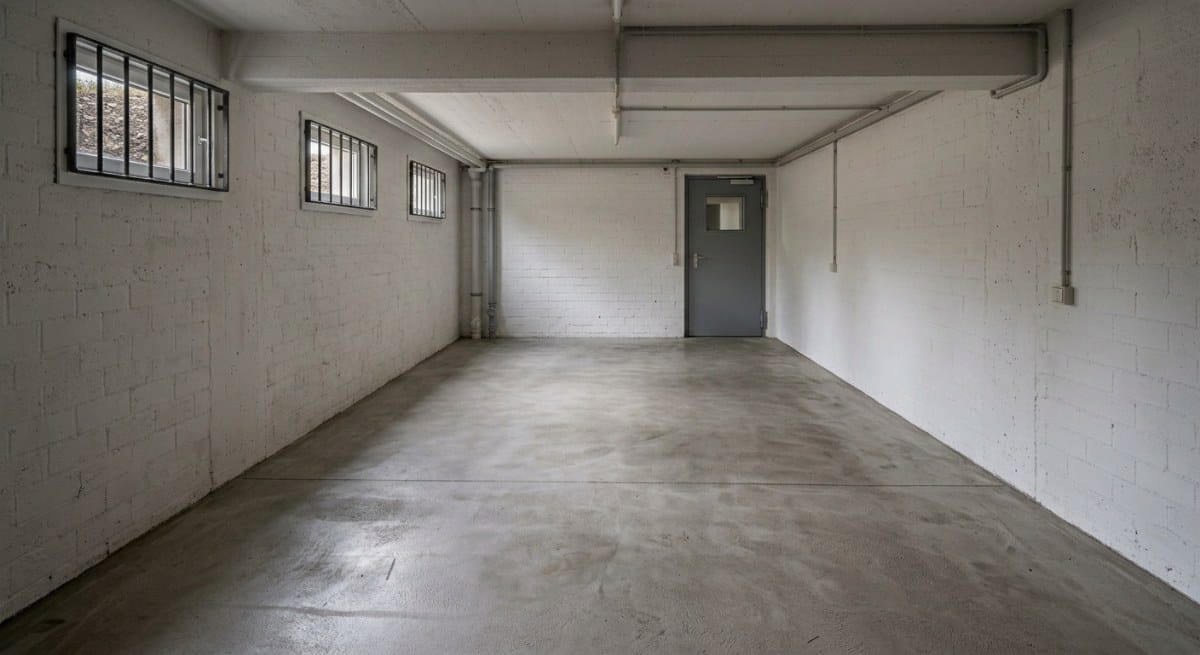
A fundamental and crucial condition. Without a suitable space, it makes no sense to even consider construction. In my case, I have approximately 30 m² of residential building basement available for a minimal monthly rent. The cellar is in a cool, dry, and very well-maintained condition, plus it is relatively easily accessible.
Connectivity
A data center cannot exist without a quality connection to the world. A dedicated optical fiber link is an absolute baseline. To provide reliable services, you need both geographical redundancy and connections to multiple independent providers. Securing dark fiber would be a massive bonus. In my case, the second condition is met because the building is located in a dense urban area, with three different telecommunications operators bringing their optical infrastructure directly to the building's entry point.
Power Supply
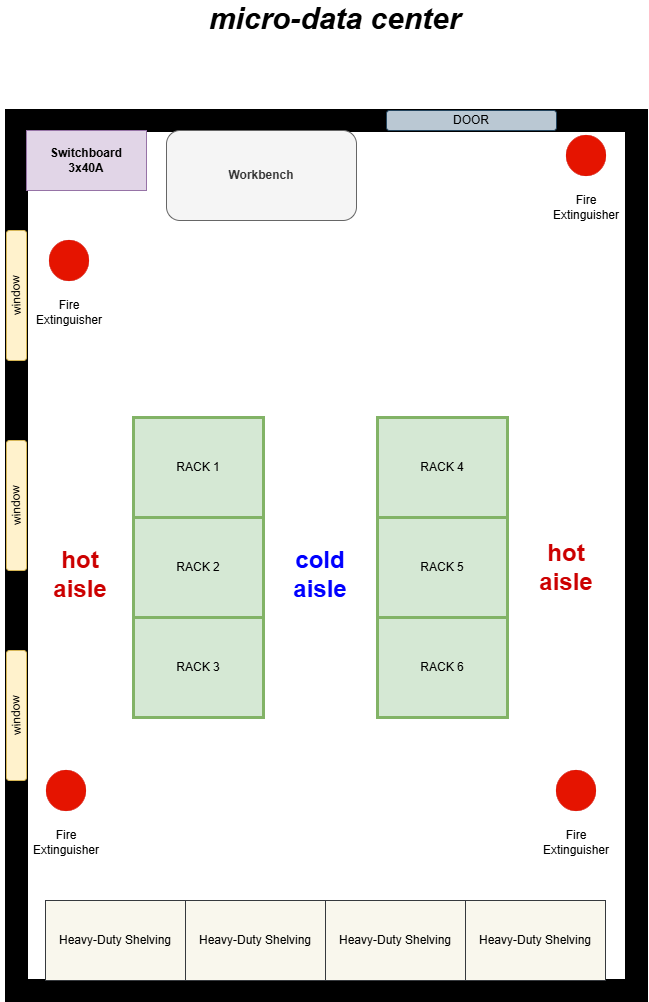
Securing up to 22 kW of power for the technology in racks does not present an insurmountable problem—the electricity distributor can offer a 3 x 40 A circuit breaker. However, a major stumbling block arises with backup power. Without a redundant power circuit, it is impossible to offer professional-grade services. Standard data centers feature at least two independent power feeds, central UPS systems, and diesel generators. The second power circuit is missing in a home basement, but as part of my feasibility analysis, I will try to find a viable compromise.
Cooling
An often underestimated yet absolutely critical component of any data center. Air conditioning is a necessity for stable operation—servers and network gear generate an enormous amount of heat that must be efficiently exhausted outside the building. Here too, redundancy must be factored in, as a cooling failure can have fatal consequences for the hardware. Although servers usually have thermal protection, their automatic emergency shutdown means an immediate service outage. Fortunately, my basement space features cellar windows through which ductwork can be routed to outdoor condenser units.
To minimize both capital and operational expenses, the hot/cold aisle containment concept is ideal. Cold air is blown in front of the rack faces, and hot air exits through their rear sections. This avoids the inefficiency of cooling the entire large space.
Fire Safety and Protection
Property and life safety come first. In the event of a fire, we must be instantly alerted via smoke detectors, prevent fire propagation to surrounding areas, and ideally extinguish the fire instantly without damaging IT hardware. Professional data centers utilize clean-agent gas suppression systems that extinguish fires by reducing oxygen concentration without impacting electronics. In a low-cost concept, however, economic reasons force us to resort to more accessible solutions in the form of portable CO2 extinguishers certified for live electrical equipment.
Physical Security and Monitoring
Includes protection against unauthorized intrusion, the risk of water flooding, and fire itself. Both data and hardware require thorough protection against theft and damage. Security doors, a CCTV system, and water leak or temperature sensors form the absolute baseline. For a low-cost solution, monitoring built on open-source tools such as Zabbix will suffice. However, the question remains whether such a level is sufficient from the perspective of demanding clients and international Tier I–IV certification standards.
Insurance
Having insured infrastructure is an absolute necessity in the case of a basement data center in a residential building. However, finding an insurance company willing to actually insure such a specific risk in non-residential spaces of an apartment building will be a much greater challenge than the price of the policy itself.
IP Address Range
If we want to offer public IT services, we cannot do without a sufficient allocation of IP addresses—not in units, but in dozens to hundreds. If you do not negotiate an IP block directly with your connectivity provider, you must buy or lease one on the secondary market. Purchasing your own /24 IPv4 block (representing 256 IP addresses) currently costs approximately $7,000 to $10,000 USD.
Why Enthusiasm Is Not Enough
This is a basic overview of the most important building blocks for operating a small data center intended for the commercial provision of IT services. As you can see, turning enthusiasm for decommissioned hardware into real and reliable operation involves a whole range of challenges.
In the following article, we will go in-depth and analyze my specific case step-by-step:
- We will look at a detailed cost calculation (CAPEX and OPEX) for a 6-rack model.
- We will go through all critical hurdles—from power connection limits, noise regulations, and safety audits to the (im)possibility of insurance.
- We will reveal whether such a project makes actual economic sense, how long it will take for the investment to return, or what more reasonable alternatives are available if you still want to build a profitable business on the acquired hardware.
 Lukas Marek