


Are you curious about how the video signal from the World Cup in the USA, Mexico, and Canada travels from the stadiums to television headquarters, and ultimately to your TV screens, smartphones, or other end devices? If so, I might disappoint you. Detailed information regarding the shape of the distribution infrastructure is not commonly accessible, especially before the tournament kicks off. When information does surface, it tends to be very brief and generic. However, this is hardly surprising. Comprehensive breakdowns of network routes and technologies are subject to non-disclosure agreements, represent valuable corporate know-how, and, last but not least, are crucial for the security of the entire operation.
Most reports on how signals reach broadcast centers essentially boil down to two options: via satellite, or using the SRT IP protocol. While satellite distribution is a time-tested, well-established method and most of you will have at least a rough idea of how it works, SRT represents a relatively new and still poorly documented solution.
If you want to know how the principles of SRT distribution work in practice, you have come to the right place.
World Cup 2026 Content Distribution via SRT
As I have already mentioned, comprehensive and detailed information just days before the tournament starts is virtually non-existent. Or perhaps I simply haven't searched thoroughly enough.
Let’s put our heads together, apply some reverse engineering, and reconstruct a likely model of the distribution network based on available sources and fragmented pieces of information. We will map out how such a signal transmission could look in reality and over time, we might just see how close we came to the truth.
What Do We Know About the World Cup and the Technologies Being Used?
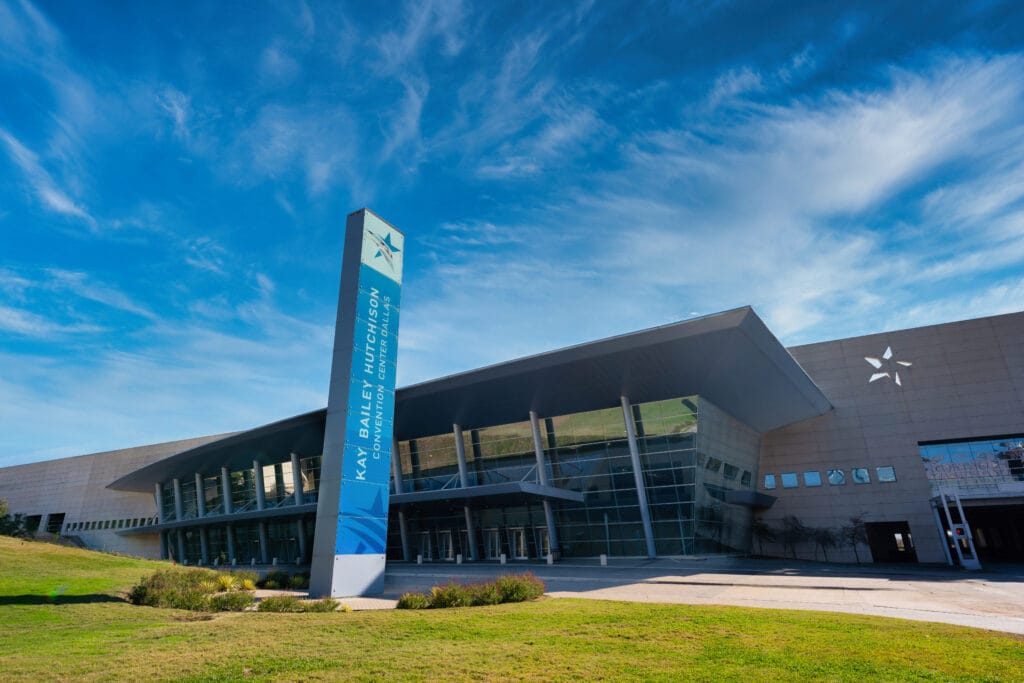
Let’s summarize the facts that can be gathered from public sources. The heart of the entire football championship will be the International Broadcast Centre (IBC) in Dallas. The IBC plays several critical roles. In addition to providing facilities for journalists, rights holders, television studios, and other technical and production teams, it functions primarily as the main signal hub.
All signals from every stadium converge at the IBC. Ranging from the main international program (World Feed) and VAR system feeds to commentary positions and individual television networks' unilateral feeds. From the IBC’s perspective, the process of bringing signals into the venue from the stadiums is referred to as signal contribution. Conversely, the signals that the IBC delivers to rights holders based either directly inside the centre or anywhere else across the globe are considered distribution.
A major role will be played by the American company Verizon, the official telecommunications partner of the tournament. Their task is to provide the complete network infrastructure and connectivity. Verizon is building what is called the Broadcast Contribution Network (BCN), a dedicated network that will reliably connect all stadiums directly to the IBC in Dallas, enabling the secure transmission of video signals and data.
Another valuable source of information is HBS (Host Broadcast Services), which, as the host broadcaster, is fully responsible for the technical and production delivery of the entire championship. HBS is behind the construction of the IBC and the playout of multimedia content. Looking at the current job openings on their official website (where they are searching for positions like Cloud Broadcast Engineers), one can clearly read between the lines regarding the growing requirements for expertise in cloud architecture and the SRT protocol within a live production environment.
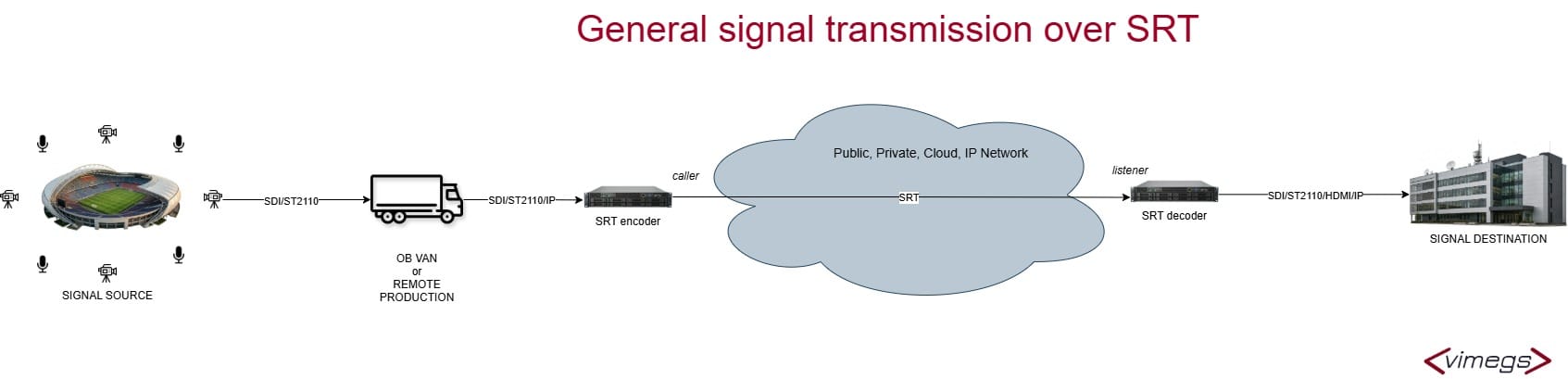
The final crucial clue comes from a statement made by Oscar Sanchez (Head of Host Broadcast Production at FIFA) for SVG Europe magazine. He confirmed that content distribution will concurrently utilize both satellite broadcasting and the SRT protocol. SRT (Secure Reliable Transport) is a technology that enables low-latency, reliable, and secure video signal transmission over any IP network including the public internet. You can learn more about SRT here:
 Lukas Marek
Virtualization and SDN (Software-Defined Networking) go hand in hand with signal transmission over IP infrastructure. Software-defined networks represent a modern approach to designing and managing network infrastructure, bringing high flexibility and the ability to respond instantly to current traffic demands. Furthermore, thanks to programmability, numerous network functions can be automated, allowing for the rapid implementation of changes and on-the-fly route reconfiguration. Today, SDN networks are already an indispensable component of any major sporting event, such as the Olympic Games or the World Cup.
The deployment of SDN infrastructures in broadcast directly implies the use of the SMPTE ST 2110 standard, which is progressively replacing traditional SDI (Serial Digital Interface) entirely. Although classic SDI over coaxial cables is being succeeded by fiber optics today, we are still talking about point-to-point connections rather than a native IP infrastructure. If we wanted to route such a signal into an IP network, we would have to utilize conversion gateways. However, this means deploying additional active elements that increase latency and potentially reduce the reliability of the entire chain. Therefore, using native ST 2110 directly from camera chains and production switchers is the logical choice.
Within the ST 2110 standard, the signal propagates through the IP network via multicast routing. A fundamental advantage here is the separation of individual components. Video, audio, and ancillary data are transmitted in separate multicast streams. This enables highly efficient routing, where we direct only the data genuinely needed for a specific task to a particular destination device (such as an audio control room or an archive).
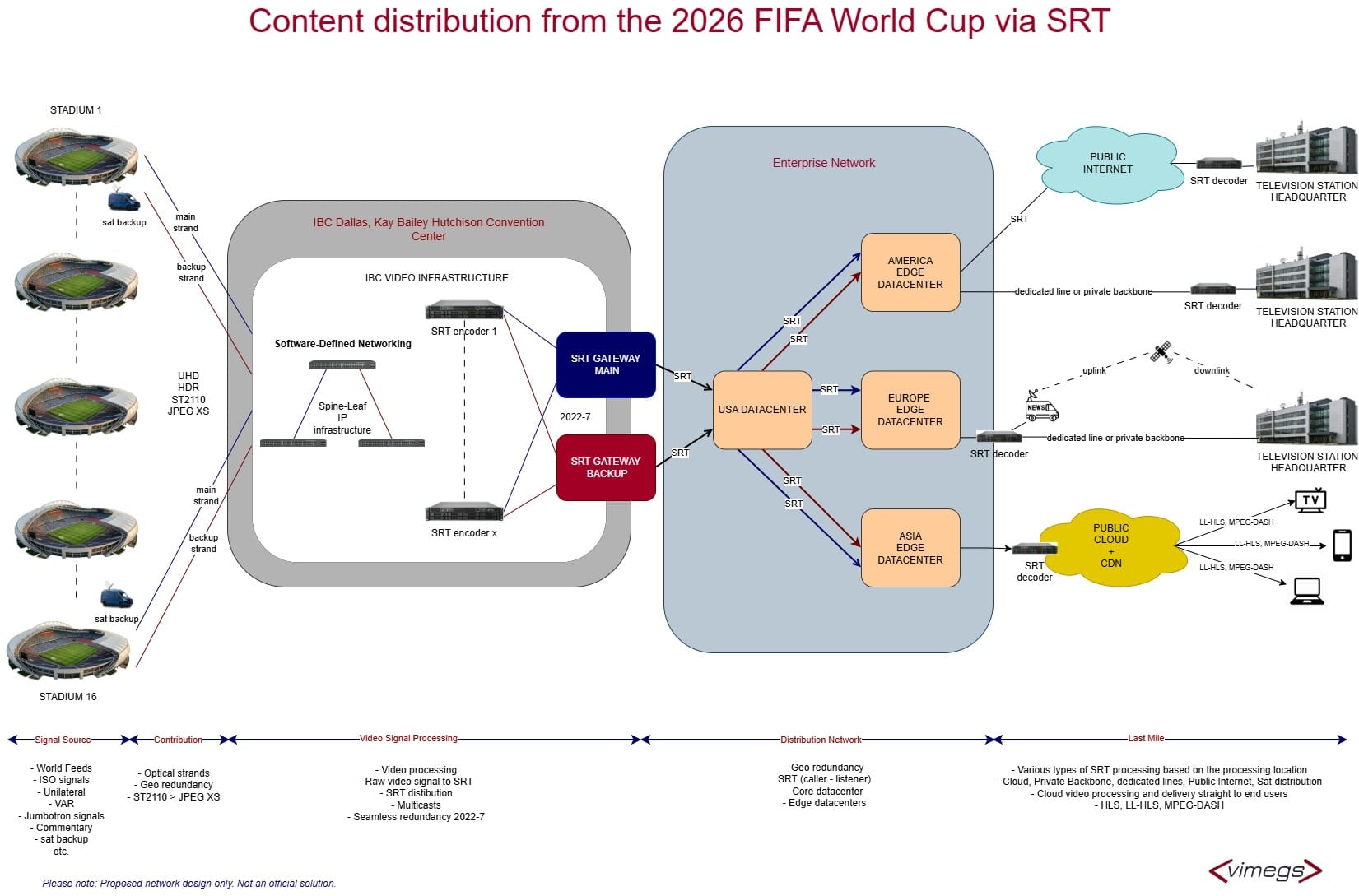
Proposed Distribution Network Architecture Utilizing the SRT Protocol
Now we know where the IBC is located, the role it plays, which organizations are behind the tournament's technical production, and what key technologies form the backbone of the internal infrastructure. Based on these facts, we can proceed to the actual design of an SRT-driven distribution network.
In the following section, we will apply an analytical approach to build an architecture that meets demanding broadcast standards. We will map out the entire technological chain from the stadium to the television station headquarters using a block diagram format. In doing so, we will focus primarily on the SRT-based distribution segment. Specifically, the route between the IBC in Dallas and the television networks.
What the World Cup Distribution Infrastructure Looks Like When Transmitting via SRT
As we already know, the World Cup will take place across 16 stadiums, for the first time spanning three nations and multiple time zones. Below, I will outline how the complete broadcast chain for this championship most likely looks.
Each stadium is connected to the International Broadcast Centre (IBC) via primary and backup fiber-optic lines. Geographic path diversity is an absolute necessity here, as it fundamentally increases the overall reliability of the chain. Satellite transmission will also likely be utilized as a secondary backup (a backup for the backup) from the stadiums to the IBC.
Every match generates a massive amount of content. This includes the main international program (World Feed), isolated camera channels (ISO feeds), and extensive supplementary material. Let's focus on the World Feed, the signal intended for the end viewers. The output from the stadium is generated in 4K UHD/HDR and distributed natively via SMPTE ST 2110. Such an uncompressed signal places extreme demands on bandwidth, with bitrates reaching tens of Gbps per single stream. Although Verizon's fiber network can handle these capacities, a lightweight, visually lossless compression with low latency (most commonly JPEG XS) is standardly used to significantly reduce the data rate without degrading picture quality.
Both Main and Backup signals from all stadiums arrive at the IBC in Dallas. Inside the IBC, the signal propagates exclusively over an IP infrastructure managed by SDN. Here, the feeds undergo further processing and are routed to core areas such as the MCR (Master Control Room), CDU (Contribution, Distribution, Unilateral), and QC (Quality Control).
From these technical areas, the signals are then prepared for actual distribution to the rights holders. Broadcasters have the option to hand off the signal physically right inside the IBC and distribute it on their own, or leverage distribution via satellite, data centers, or the SRT protocol.